
David Nicholls walks into Trullo, in Islington, and mentions, as he sits down, that this is his local but then reveals he has never tried it until today. There is no mystery about this. Since One Day made his name in 2009 – the novel has sold more than five million copies – his life has been, if not all work and no play, something of a marathon. He has, at 48, the appearance of a good-looking, grown-up schoolboy (though more laundered), and there is a familiar niceness about him – I feel as if we had been friends in a previous life.
One Day was a love story that reminded readers that romance is at the mercy of time – and timing. Success is also about timing and when the novel hit the jackpot, Nicholls was swiftly pitched into writing a screenplay for Hollywood. It was too much, too soon and the 2011 film of One Day, starring Anne Hathaway and Jim Sturgess, was a critical flop. Nicholls now wonders whether he might not have been better employed concentrating on another book. As it happens, it was not until last autumn that, after at least one false start, Us, a divorce comedy, was published. It did not aspire to be literary and yet it made the Booker longlist – a tribute to its sensitive, entertaining readability. Nicholls has been consistently busy as a screenwriter (Tess of the D’Urbervilles for the BBC; an adaptation of Edward St Aubyn’s Melrose novels in the pipeline). Most recently, he has written the script of the new film of Far From the Madding Crowd, starring Carey Mulligan, Matthias Schoenaerts and Michael Sheen – a masterly filleting of Hardy’s novel. “I see it as Gabriel and Bathsheba’s story but also wanted to reveal the book’s feminism which, though neither perfect nor anachronistic, is striking.” At one point, Bathsheba says something so modern that when I saw the film I assumed – wrongly – that it could not be Hardy’s own work: “It is hard for me to express my feelings in a language made by men to express theirs.”
Nicholls has no difficulty with expressing feelings in his writing and is adroit at the conversation between lovers. We discuss the contrast between Hardy’s dialogue and his own and he makes the surprising point that while Hardy’s lovers are “pretty up front” about desire, our contemporary relationships are less straightforward: “When people talk about relationships now there is an irony, a flipness. This might be a British thing, a wariness about sincere expression. There is a lot of bungling and incompetent expression of love and sexual desire.” Douglas, the protagonist of Us, is a case in point: “He does not reveal how much he loves his wife and son, keeps himself buttoned up.” And is Nicholls similarly inhibited? How good is he at expressing his emotions on a scale of 1-10? “I imagine I’d be somewhere around a six,” he laughs. He adds: “In movies, lovers deliver wonderful speeches about why they belong together that always work. In real life, I imagine, they never do. I’ve not made any of those speeches…” He looks bashful: “What I love about Hardy is that he writes duets: two people meet in a wild environment and have extraordinary confrontations…’’
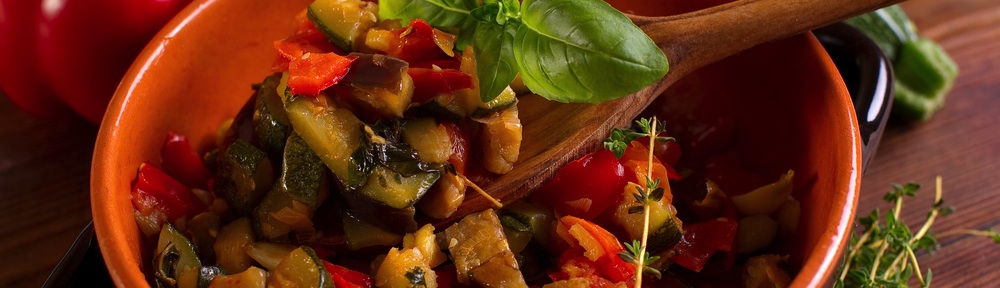
He is interrupted by the arrival of our main course. We have harmoniously opted for the same dish and each approve of everything about Trullo and its choice, unfussy, generous cooking. And now Nicholls explains how his first career, as an actor, helps him write. “I always think: would this be fun to perform?” Yet when he was growing up, in Eastleigh, Hampshire, neither acting nor writing seemed likely careers. His father worked in a Mr Kipling cake factory. He remembers his boyish self as “pretentious, flighty, not very good at sport – bookish”. The game-changer was getting into Bristol to study drama and English (“the central event of my life. I absolutely loved it”). After that, he trained at the American Musical and Dramatic Academy in New York.
He insists he was never a good actor. What makes an actor great, he maintains, is “lack of self-consciousness. The best actors are not straining. They do not quite know what they are doing, they are not over-intellectualising. I was like a bad driver clunking through the gears.” His career included understudying (his second novel, The Understudy, was inspired by it): “You have a strange relationship with the actor you are understudying. You’re roughly the same age with a similar acting style – it is just that they are doing much better than you. You’re the B version.” Nicholls understudied Konstantin in The Seagull at the National while playing a Russian peasant: “I used to go on every night, nod at Judi Dench and then walk off. Afterwards, I’d sit at the back of the theatre and chat, flirt and plan.” He “learnt a lot” but it was not long before his plans changed and page took over from stage.
Nicholls is so unpuffed up, it makes you want to lavish compliments on him. I ask what sort of a cook he is and he tells me he does most of the cooking for his partner, Hannah, a former producer and scriptwriter now studying history of art, and their two children. But he underplays any possibility he might be good at it. “Hannah is a very good cook. For me, it is a little escape, a way to unwind and a distraction.” He works 9-5 in an office near the Barbican and at the beginning of every week “makes a big pot of boring soup so I don’t have to think about lunches”. Dull dahl? “Yes,” he laughs. “Things I can’t do,” he goes on. “I can’t bake…” I interrupt to ask whether, for nostalgia’s sake, he gives his children Mr Kipling cakes? “Absolutely the opposite. My childhood was fondant fancies and Bakewell tart and that terrible fruit cake – what was it called? Dad would bring them home tucked into his coat. I hated them then and hate them now. The Mr Kipling factory was not a nice place to work.”
One of the enjoyable things about Us, which Nicholls thinks the best thing he has written (“I like it more than One Day”), is the way the relationship between father and adolescent son is drawn. What sort of a father is Nicholls? “I’m no disciplinarian. I’m soft, persuadable and rarely shout. But when you become a parent, you find yourself more conservative than you expected. I find myself saying things I thought I’d be too cool to say.” This turns out to be a preface to admitting he tells his children to eat their greens.
Talk of parenthood slips into a discussion of middle age and its vexations (although a committed coffee drinker, Nicholls claims he no longer dares drink coffee after midday). But he prefers his forties to his twenties. “In my twenties, I was always worrying about money and career. I did not travel, was tied to London bedsits and felt older than I was.” His thirties were an improvement because of meeting Hannah. “It was also a happy time because I was settling into writing.” But he will confide that, although the forties trump earlier decades, he struggles with being “no longer part of youth culture. When I walk into a bar, people look at me as if I was there to pick up the kids.” And this is exactly what he is going to do once lunch is over – pick up his kids from primary school. He loves having children, regrets only this: “Before having kids, we put a huge amount into our social life. I miss that very much. I suppose I’m more serious about work now than I was before – I’d like to keep writing for another 20-30 years.” I jokingly ask whether his next novel could be called Them? He laughs obligingly but insists it will be “a little while” before he has a new novel on the go. And with that, though it is almost three o’clock, we order coffee.
David Nicholls is at the Curious Arts Festival, 17-19 July, Pylewell Park, East End, Lymington SO41 5SJ; curiousartsfestival.com; 0800 088 2373. Us is published by Hodder. Click here to buy a copy from the Guardian Bookshop for £15 (RRP £20)
